Well. It’s been ages since my last post so I guess I owe an explanation. Nothing scandalous, I just have a job. Landed it about a year and a half ago. Since that time I’ve wanted to make sure it was getting my full attention and my full creative mojo, which meant the blog had to take a back seat. But I’m back now and there is a lot to catch up on, including the site design, which is going to get a change.
Let’s start with the biggest travesty since ABC axed Last Resort: A&E canceled my beloved Longmire after its third season. A third season that ended with an empty shell bouncing on the ground after Branch and his father stared each other down over shotgun barrels. Who shot whom? I thought it was Branch because the shell landed by a box that would have been at his feet. Thankfully Netflix saved us and put out a pretty bold 10-episode season.
The decision to cancel unleashed a hell storm of angry fans on the A&E Facebook page, a problem fed not so much by the cancellation but the given reason: Longmire’s audience was too old. The cable channel is moving to populate its primetime lineup with cheaper “reality” shows that follow the likes of Donnie Walberg. Months after the cancelation fans still bombard every A&E update with messages conveying their displeasure and pledge to never watch the channel again. I’m one of them. The only other A&E show I watch was Bates Motel, and I never got into season two. Life goes on.
Let’s see, what else happened…
Alyssa Milano left Mistresses. Yeah. That happened. After filming wrapped on season two the show joined the long list of productions that packed up to follow the lucrative stream of taxpayer revenue offered by cities and states that aren’t Hollywood, California. Finances aside, it’s a mind-numbingly stupid decision by ABC executives to move the show 1,800 miles to Toronto after its star and main character had her second child. Babies are known about well in advance of their birth so ABC either knew she’d quit and didn’t care or foolishly thought she’d uproot her growing family. Stupid calculations either way.
Milano was open to the idea of a one-episode appearance to wrap Savannah’s story. I don’t think that’s a good idea and it didn’t happen. Season three went on just fine without her. I think the writers did an admirable job of crafting a storyline that left me thinking the Savi character would have been a real drag on the show.
Apart from the off-screen drama from my two favorite summer shows, the television world kept turning. The old standbys still move forward. Some rising, some stumbling. There’s a lot to talk about. Stay tuned.
I avoid predicting television shows because viewers rarely have enough information to make good ones. I tried earlier this season with Person of Interest and it blew up in my face, so I’m loathe to do it again. But I will.
My prediction for the Person of Interest season finale is that Harold has to choose between The Machine and Samaritan.
I am pushed to the point of prediction by the dialogue surrounding Harold in the past two episodes. Look at some of these lines:
“I can’t help you make a picture of God.” – Grace said to Greer as he seeks information about Harold.
“Perhaps you can.”
This conversation between Greer and Finch was amazing.
“I want to talk about the future. And who more qualified for that conversation than the father of artificial intelligence?” – Greer to Finch while Greer has him captive.
“I’d always imagined it was about the power of creation.” – Greer
“Now your God has disappeared, operating on its own accord. Children can be so disappointing.” – Greer
“I’d be aware of false idols, Mr. Greer.”
“As the father of AI you’re the only one in the world that can destroy it.” – Greer. Noah? The flood? Anyone?
“Having built something significantly smarter than myself how could I possibly anticipate its evolution?” – Finch
“You’re a destroyer, not a creator,” – Harold. OH MY GOD.
“The father became fearful of his son.” – Greer
“I built the machine to save lives. But how could I be certain that it wouldn’t one day determine that all of humanity was irrelevant?” Finch, to Greer.
“It’s pure hubris to think that you could control something so powerful.” Finch, to Greer.
“That is the most important man in the world. The father of a new age.” – Greer about Finch.
Father, creator, evolution. Shows don’t run up to their season finale with dialogue like that by accident. Greer’s search for Harold has now spanned two seasons and it will come to a head in a season finale entitled Deus ex Machina. Making Harold the subject of all this talk – the one who created this intelligence and imparted into it his humanity – leads me to believe he is approaching his moment of truth.
Covering my bases:
In the midst of a double-bogey this morning I was thinking back to the end of last season. The Machine went into “God Mode” and spoke directly to Root and Reese after shutting itself down due to a virus unleashed by Decima. Everyone converged on what they thought was The Machine, only to find out it had dissembled itself and shipped its components off to parts unknown. We still don’t know where it went, and it hasn’t been very much of a subject this season. I doubt that facet of the story will be brought up in this season’s finale, too.
But it got me thinking. God from the machine. The Machine evolved from what Harold first created. It knew enough to hide from Root, then it initiated an “analog interface” to use Root to prepare for what she (The Machine she, not Root she) saw coming, which we now have to believe is Samaritan.
There’s a literary meaning to deus ex machina that symbolizes when a story suddenly comes together in such a preposterous way that it is almost comedic. Writers try to avoid it for that reason, but it doesn’t have to be that literal for the season finale. It can mean The Machine does something no one – Harold, Greer, Collier – expects. Something like take herself apart and ship herself somewhere else.
One last thing bugs me from the most recent episode: Who sent Collier that text? He just found out his brother committed suicide for wrongly being accused of a crime by The Machine and – bam – he gets this text from someone who claims to be able to tell him what happened. My crackpot theory: The Machine sent it to start the process that will end in the season finale. My even more crackpot theory: Samaritan did it.
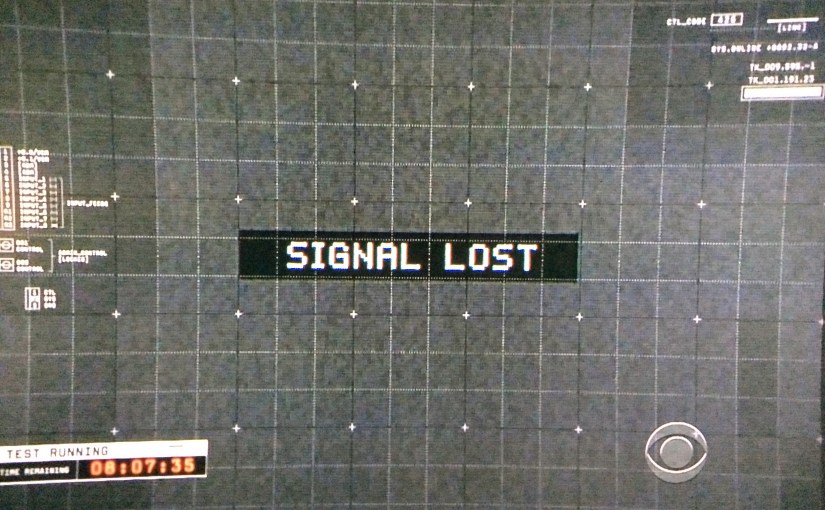
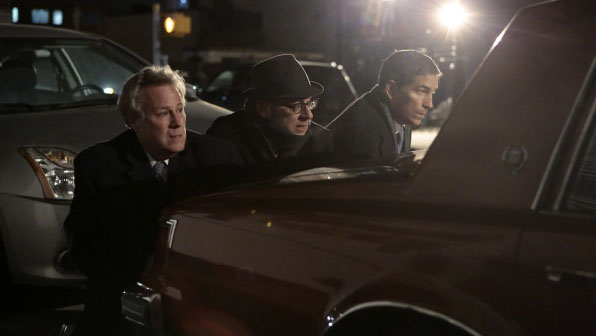
Last week gave Person of Interest viewers their first look at Samaritan, the competing surveillance system that threatens to bring down The Machine – Harold, Reese, Shaw and Root along with it. I posted my thoughts right after the episode but want to take a closer look at how the two systems differ.
This is the last we’ll see of The Machine this episode. Or is it?
This slideshow requires JavaScript.
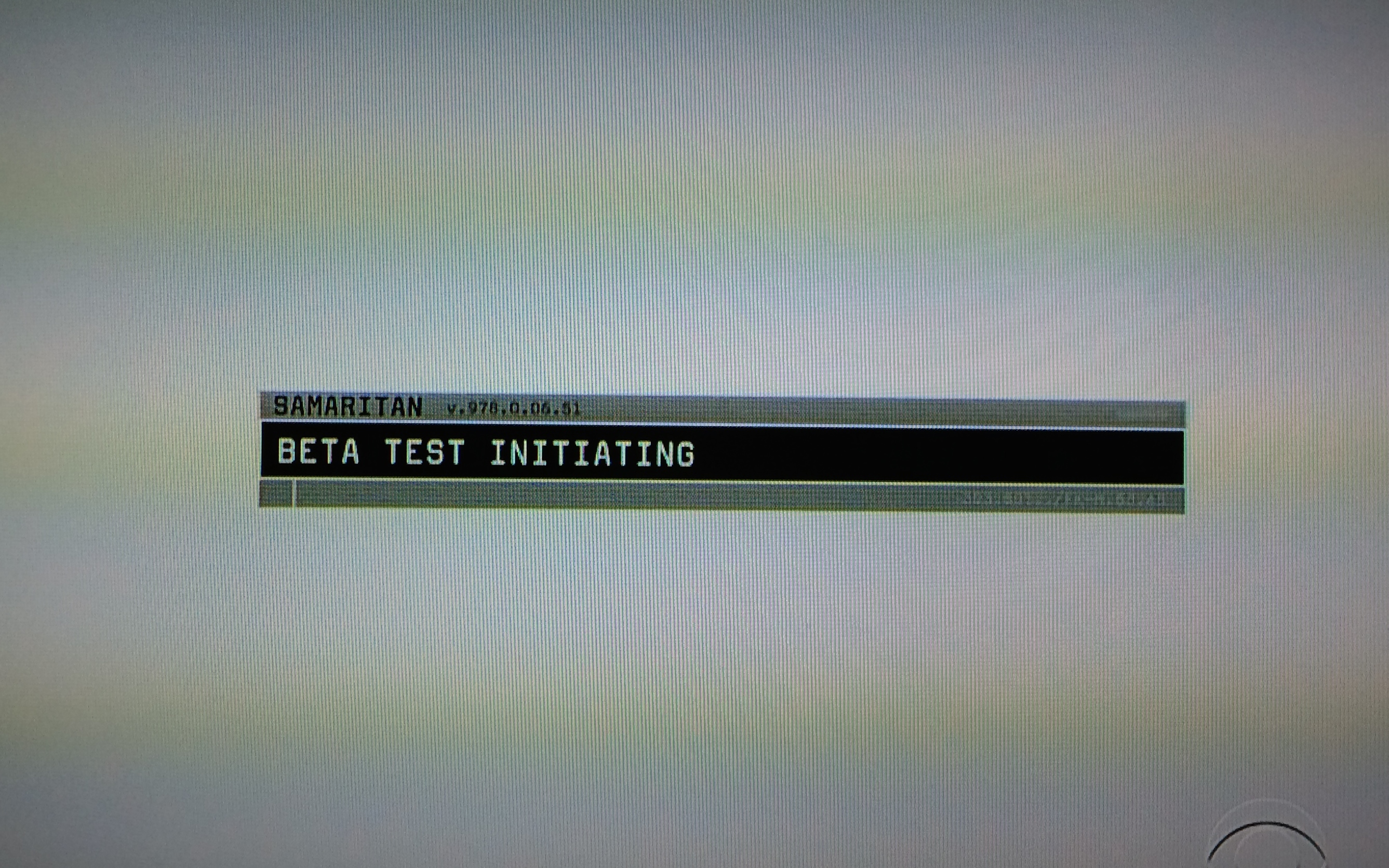
Samaritan’s white launch screen is a 180 from The Machine’s black background pictured above:
Samaritan’s beta test included surveillance networks within New York City’s five boroughs. Notice the white background.
A look at the differences and similarities in how they identify subjects. The biggest thing to note here is how Samaritan is given mandates and targets. Harold programmed The Machine to prevent using it exactly that way.
This slideshow requires JavaScript.
You can see more of Samaritan’s organized vertical interface versus the way The Machine scatters information about the screen:
This slideshow requires JavaScript.
A look at the differences as they appear when Samaritan and The Machine search their archives:
This slideshow requires JavaScript.
The systems use opposite ways of marking targets:
This slideshow requires JavaScript.
This shows that for all their differences, the two systems operate with the same fundamental technical skills:
This slideshow requires JavaScript.
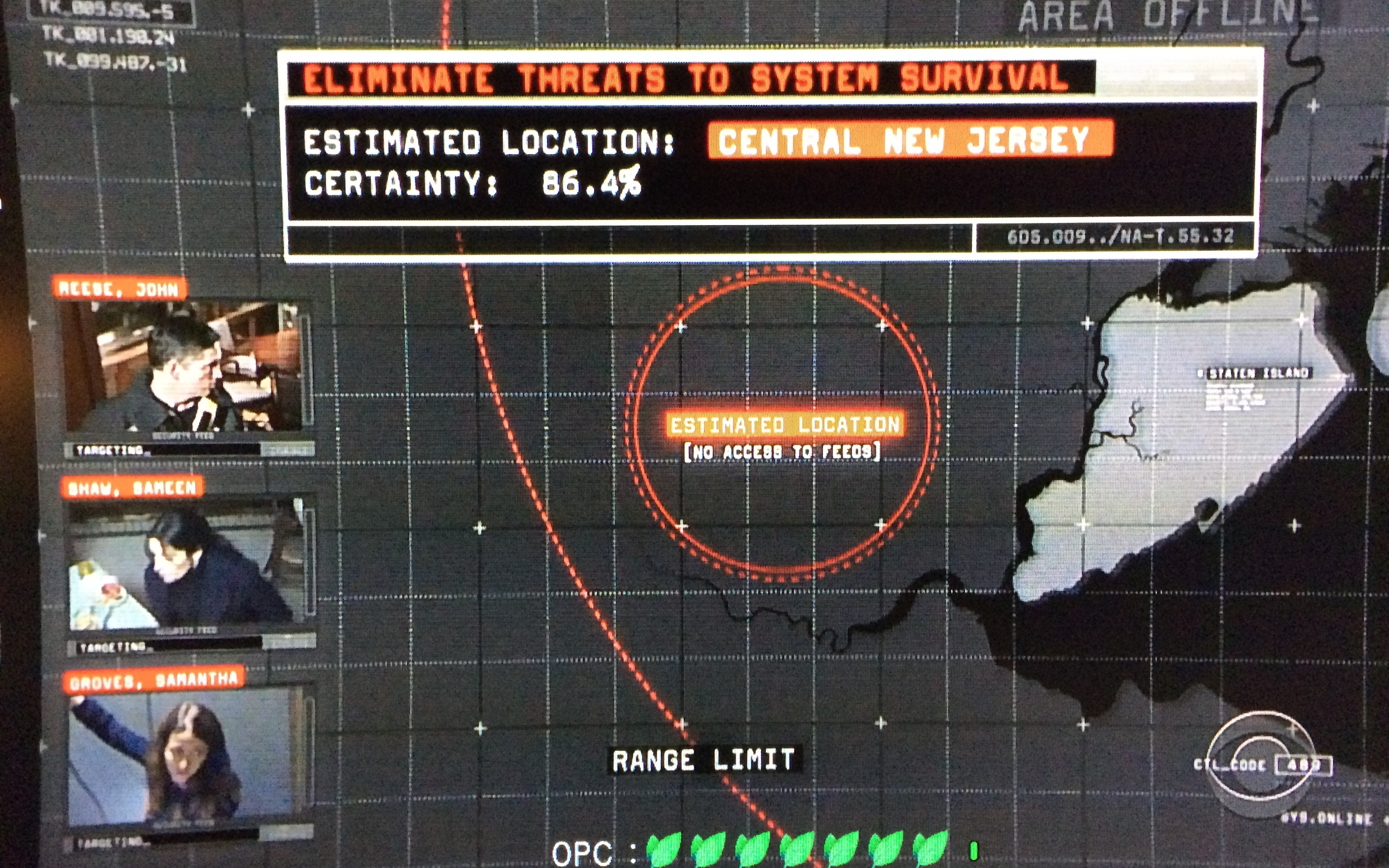
Here is the key difference the show has been driving home to its viewers: The Machine only identifies threats, Samaritan finds them and tells you what to do with them.
This slideshow requires JavaScript.
Despite being limited to New York City during its beta test, Samaritan was able to use last known destinations and travel times to estimate a location outside the city.
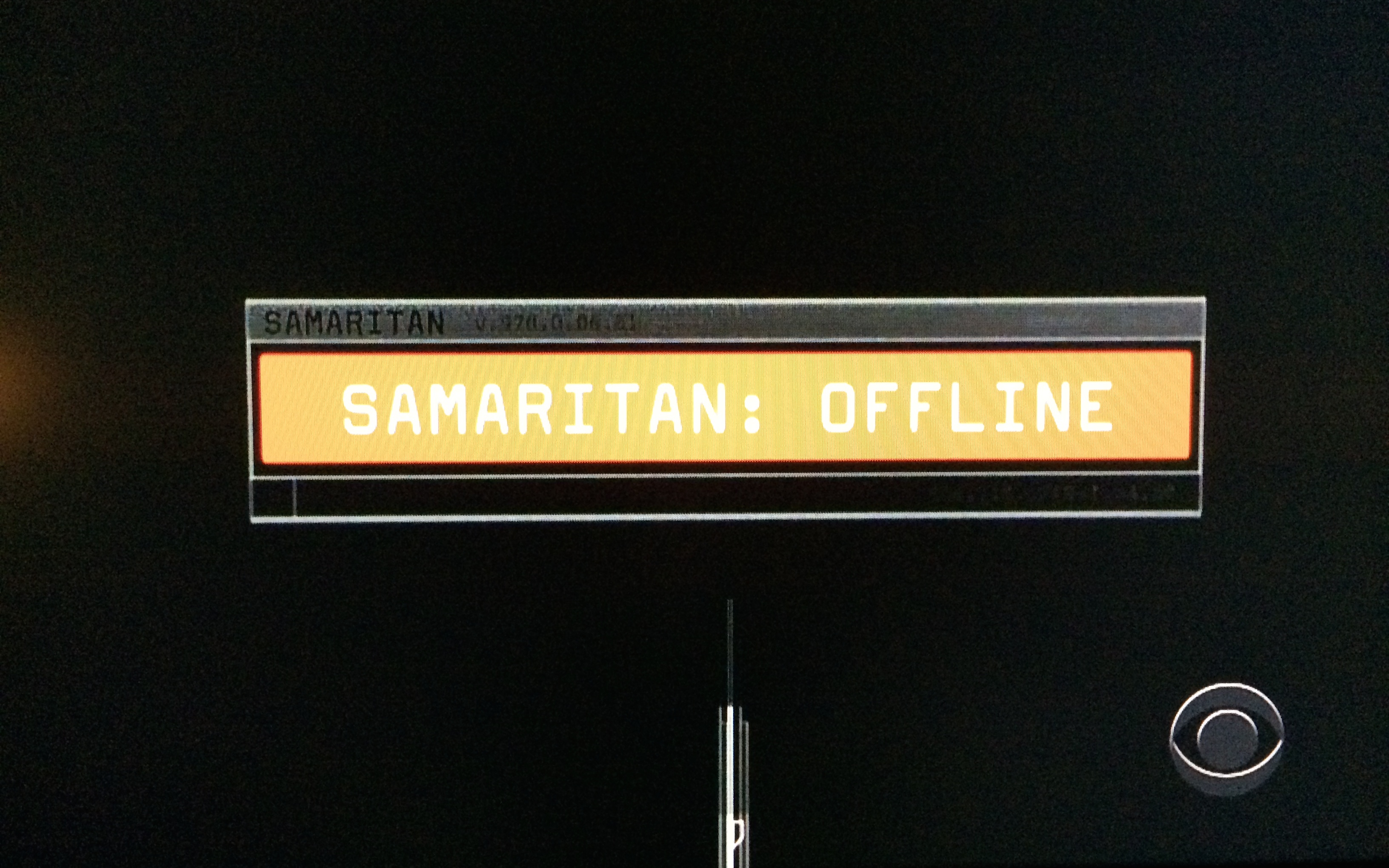
Remember when I said we might see The Machine later in the episode? I think this is it at work protecting Harold. Wherever it identifies him, it shuts down the feeds so Samaritan cannot see him. Note that it doesn’t give the same protection to anyone else.
As I observed in January, the storylines in season three of Person of Interest are so different you could split it into two separate seasons.
Season 3A brought the HR story to a close and unfortunately took Detective Carter down with it. Seeing her go was a shock, but the writers felt they had to do it in order to maintain their credibility with the audience who needs to believe that Harold Finch’s team is truly in danger.
You can see why they wanted to drive that point home as season 3B enters its final three episodes. Decima, which first appeared rescuing Kara Stanton last season, stole an artificial intelligence system called Samaritan online. Developed by one of Harold’s friends at MIT, Samaratin differs in one crucial way from The Machine:
“It’s not compromised by the ethics of its creator.”
The Machine is a one-way surveillance system. That is, it only looks for what it is programed to look for – threats. The show drilled into our heads early and often that Harold took every precaution to protect The Machine from being exploited. John Greer, the head of Decima, views that as a fatal flaw. Samaritan can give the same information, but it can also listen. Greer can tell it to find Harold Finch and it will find Harold Finch.
That’s where the writers’ credibility comes in. When Harold goes white as a ghost telling Reese they will be the first two targets if Samaritan comes online, they want you to believe it. Do I think they’re going to kill of either of them? Of course not. What matters is I buy into the notion that they are in danger, and I do.
But I’m not wild about the direction the show went with Vigilance, the anti-surveillance group that disclosed Northern Lights to the public. As the Edward Snowden story grew to look more and more like the United States government has a real life Northern Lights I feared it would work its way into the show, and it has. I’m watching the Snowden story play out in real life, I don’t need them replicating it in my favorite TV show.
The final three episodes also figure to reveal what Root has been doing running in and out of the story all season. She’s taking orders from The Machine through her (The Machine’s, not Root’s) analog interface, but all they’ve given us is that it’s to prepare for what’s coming. Whether that’s a physical showdown or a technological one, it should be good.
What exactly has been up with The Machine anyway? They’ve given us some new looks lately.
This slideshow requires JavaScript.
One last thing. The title for the season 3B finale is “Deus Ex Machina.” In its original Latin:
God from the machine.
UPDATE after tonight’s episode:
I didn’t think this was all that great. Everyone racing from place to place following The Machine’s orders like a game of Simon says doesn’t make for great television. They could have compressed that to half the time they gave it. The scene with Harold and Grace on the bridge was the mirror image of Desmond and Penny’s phone call in The Constant. I could barely handle.
What did this sub-par episode tell us?
It was short, but during the conversation between Gracie and John Greer they referred to Harold as God. Deus Ex Machina. God from the machine. Maybe this all ends with The Machine gone and Harold assuming control of Samaritan. He’s been adamant to say that it cannot fall into the wrong hands. What if it fell into the right hands? Wouldn’t Harold with all that power be a god to Samaritan? It would also add a new dimension to the show that needs to keep coming up with them.
Decima is fanatical. The way Greer’s techie pulled the trigger on John’s gun to shoot himself created a good contrast to what happened to the techie in the empty warehouse that used to house The Machine at the end of last season. He was shocked to be killed, Decima’s guy did it to himself out of devotion. This reinforces Harold’s assertion that these people cannot be trusted with the power Samaritan gives them.
Harold found his limit. The music on the show this season has been fantastic. Last week’s ended with a caressing melody sung by a woman with the lyric, “You can still be who you want to be, who you said you were, when you met me.” I thought that was meant to symbolize The Machine telling Harold he didn’t have to sacrifice his ethics to do it’s will. Maybe that was wrong. When Harold told John and Shaw to avoid taking any lives but to kill them all if they harmed Gracie I had a different idea. Harold never revealed himself to her before he chose to disappear. To her he is always what he said he was the day they met. Maybe the song is supposed to be a message from her, reinforcing to Harold that he doesn’t have to change. In fact, he can let it all go – The Machine, Reese, Decima, everything – and be Harold Martin, husband to Grace, for the rest of his days. Time will tell.
Root is going to do something big. Okay, like, duh. But she now has a freight of massive computer power she stole from Decima. What The Machine tells her to do with it will be pivotal, I think. Her little missions have taken her to Alaska, Miami and El Paso, I can’t see them mentioning that without it tying in some how. We still have the guy she shipped to South America to be heard from.
Person of Interest drew out its first two season finales into the beginnings of their following seasons. I expect the same to happen here. Trying to think where the break point might be for what they resolve now and what they spill over. Hmm.
The season finale of HBO’s True Detective is in less than an hour, and I thought I would share my thoughts.
I heard the show get rave reviews but didn’t know until Friday night that I have a three-month HBO preview so I caught up with its seven episodes in short order. Its first three episodes put me to sleep more than once, but in the show’s defense I was also very tired. It picked up in episodes four and five then finally kicked it in gear for six and seven.
Really, the show hasn’t done very much for me. I like the Rusty Cohle character a lot and enjoy his odd interpretation of human existence. But I’m not buying that he’s some sort of savant detective. I’m not buying that Marty Hart is much of a detective either, especially not if it proves out that his daughter was victimized by The Yellow King and he had no idea. Arranging five male dolls around a naked female doll, drawing lewd cartoons in her notebook with flying things and a giant wearing a mask yeah that didn’t spark a thought in his mind.
Maybe I missed out not having to wait a week between each episode reading all the theories on who or what The Yellow King is. Frankly, if I didn’t know it was a big deal I might not have caught onto it until they were sitting in Rusty’s storage shed.
And a note on theories. I spent six years studying freeze frames from Lost like many others did and in the end had nothing to show for it. True Detective is much tighter than Lost on account of about 116 fewer episodes but the larger lesson is this: Forget about them once the finale begins.
Chances are the first seven episodes didn’t give you enough information to make the right guess. Sure, it could be the lawnmower man who was mowing in spirals at the end of episode seven and it could be Marty’s father-in-law (which would probably grind my gears) but really we don’t know. I spent so much time of The End waiting for the answer to unfold for some big theory that by the time it was over and no answer came I missed out on what the show really wanted me to experience.
So when the finale starts in about 20 minutes, forget about screen caps and what letter was obscured behind Marty’s head in episode seven and all of that. Just enjoy it whatever it turns out to be.
UPDATE
I’m going to talk about the finale. But first I’m going to issue a SPOILER ALERT because HBO had major problems with its streaming service and many viewers weren’t able to watch it live. Do not consider this precedent.
Click away now.
Really lackluster finale, I thought. I like to view them through this frame: What the finale showed matters and what it didn’t show doesn’t matter. So what did it show?
That the yellow king was the lawnmower guy. Okay. Why was he a serial killer? Well we don’t really get that. Because he was messed up, I guess is what we’re to go with. It’s hard to explain a character when he’s not introduced until the last episode. I can’t explain why what they did choose to show us was him with a bunch of different accents. The yellow king was basically the bad guy who was there because there had to be a bad guy. Shallow character building, in my opinion.
I always believe that any shows final scene represents the most important story the writer(s) want to tell. In True Detective that scene belong to Rusty.
It showed Rusty having a brush with death and a brief emotional breakdown for the love he felt toward his daughter. It changed him as evidenced by what he said to Marty as they walked away from the hospital. If you want to reflect on what True Detective was ultimately about, look no further.
Forget what wasn’t shown. Marty’s daughter and what drove her to draw those disturbing pictures didn’t matter and wasn’t addressed at all in the finale. Black stars and “kin” and all that wasn’t either. The yellow king was but that’s because it had to be; it was done with 20 minutes left.
True Detective was about Rusty Cohle’s journey from pessimism to optimism. I just don’t think it was told very well.



 The Wandering Lostie